
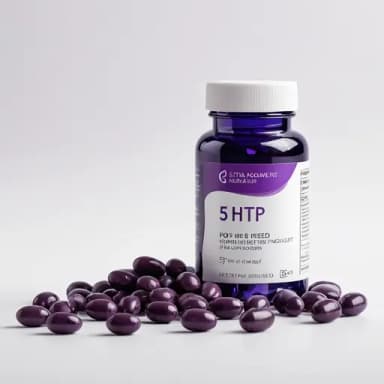
5-HTP
5-hydroxytryptophan
Also known as: Oxitriptan
5-HTP is a naturally occurring amino acid and serotonin precursor used to support mood, improve sleep quality, and aid appetite regulation by increasing central serotonin synthesis.
Introduction
5-HTP (5-hydroxytryptophan) is an intermediate metabolite in the conversion of the essential amino acid tryptophan into the neurotransmitter serotonin. First isolated in the early 20th century, it has been studied for its ability to cross the blood–brain barrier and directly increase central serotonin levels, unlike serotonin itself which cannot cross independently. Commercially, 5-HTP is typically extracted from the seeds of the West African plant Griffonia simplicifolia and is available as an over-the-counter dietary supplement in the United States, Canada, and Europe under various brand names. Clinically, 5-HTP has been investigated for its efficacy in treating depressive symptoms, improving sleep quality, reducing fibromyalgia pain, and promoting satiety for weight management. A 2020 meta-analysis found a large effect size for depression symptom reduction, though methodological heterogeneity tempers confidence in these findings (DOI:10.1093/nutrit/nuz039, PMID:31504850). Small randomized trials have shown improvements in sleep parameters among older adults (https://www.sciencedirect.com/science/article/abs/pii/S0261561424000104) and reductions in fibromyalgia-related pain (PMID:1521674). Typical supplemental doses range from 50 to 300 mg per day, often coadministered with vitamin B6 to support conversion to serotonin. Due to potential serotonin syndrome risk when combined with other serotonergic agents, caution is advised. Overall, 5-HTP remains a popular specialty compound for mood, sleep, and appetite support, but further large-scale, high-quality trials are needed to confirm long-term safety and efficacy.
Main Benefits
Supports mood and reduces depressive symptoms by serving as a direct serotonin precursor in the central nervous system.
Improves sleep quality, particularly in older adults with poor baseline sleep, by increasing melatonin synthesis downstream of serotonin.
Reduces fibromyalgia-related pain and associated symptoms through enhanced serotonin-mediated pain modulation.
Promotes satiety and may support weight management by increasing central serotonin levels that regulate appetite.
Mechanism of Action
5-HTP bypasses the rate-limiting enzyme tryptophan hydroxylase by providing the immediate precursor to serotonin. After oral ingestion, 5-HTP is rapidly absorbed and crosses the blood–brain barrier, where it is decarboxylated by aromatic-L-amino-acid decarboxylase—often with vitamin B6 as a cofactor—to form serotonin (5-hydroxytryptamine). Elevated central serotonin levels enhance neurotransmission in mood-regulating pathways, contribute to melatonin synthesis in the pineal gland for sleep regulation, and modulate nociceptive pathways to reduce pain perception. Peripheral conversion of 5-HTP can also produce serotonin in the gastrointestinal tract, influencing gut motility and appetite signals. By increasing the availability of serotonin precursors, 5-HTP supports neurochemical balance without the need for transporter-mediated tryptophan uptake.
Natural Sources
5-HTP is naturally found in the seeds of the West African plant Griffonia simplicifolia, which have been the primary source for commercial extraction. Trace amounts are also present in turkey, bananas, and certain other plant-based foods, but dietary intake from these sources is negligible for therapeutic purposes.
Examples:
Griffonia simplicifolia seeds
Turkey (trace amounts)
Bananas (trace amounts)
Natural dietary sources contain only trace 5-HTP, making it impractical to achieve therapeutic doses without extracted supplements.
Recommended Daily Intake
There is no established Recommended Daily Intake for 5-HTP. Typical supplemental doses range from 50 to 300 mg per day depending on the indication and individual factors.
Sources for RDI/AI:
These values are for reference only. Individual needs and tolerances vary; consult a healthcare provider for personalized guidance.
Effectiveness for Specific Focuses
A 2020 meta-analysis demonstrated a large effect size for reducing depressive symptoms in small clinical trials.
Clinical trials report improved sleep quality in older adults, suggesting moderate support for sleep regulation.
Studies indicate increased satiety and reduced food intake, but data are limited and preliminary.
Safety Information
Potential Side Effects
Nausea
Vomiting
Diarrhea
Heartburn
Drowsiness
Vivid dreams
Contraindications
Pregnancy and breastfeeding
Concomitant use with SSRIs, MAOIs, or other serotonergic medications may cause serotonin syndrome
Overdose Information
High doses have been associated with serotonin syndrome; risk increases when combined with other serotonergic agents.
Excessive 5-HTP intake may lead to serotonin syndrome, with symptoms such as agitation, confusion, tachycardia, hypertension, and muscle rigidity.
Documented Overdose Symptoms:
Agitation
Confusion
Rapid heart rate
High blood pressure
Muscle rigidity
Serotonin syndrome
Specific toxicity thresholds are not established; case reports describe serotonin syndrome at high supplemental doses.
Interactions
Drug Interactions:
May increase risk of serotonin syndrome when combined with SSRIs, SNRIs, MAOIs, or other serotonergic drugs
High risk due to additive serotonergic effects when combined with other antidepressant medications.
Other Supplement Interactions:
Concurrent use with St. John’s Wort or tryptophan supplementation may increase serotonin syndrome risk
Moderate risk when combined with other serotonin-increasing supplements.
Not recommended for pregnant or breastfeeding individuals. Use with caution in patients taking serotonergic medications; consult a healthcare provider before use.
Forms and Bioavailability
5-HTP is available as capsules, tablets, powders, and standardized Griffonia simplicifolia seed extracts. Formulation affects absorption and conversion efficiency to serotonin, often enhanced by coadministration of vitamin B6.
Capsule
Contains pre-measured doses of 5-HTP; bioavailability is high when taken with vitamin B6 to support decarboxylation.
Consistent dosing and cofactor inclusion enhance central conversion to serotonin.
Store in a cool, dry place; take with food to minimize gastrointestinal upset.
Powder
Powder can be mixed into beverages; absorption is rapid but stability depends on moisture control.
Convenient dosing, but moisture and handling may reduce potency over time.
Seal tightly after use; measure accurately to avoid dosing errors.
Griffonia simplicifolia extract
Natural extract standardized for 5-HTP content; bioavailability varies based on extraction quality and coexisting plant compounds.
Variability in extract potency and additional constituents may affect absorption.
Verify standardization of 5-HTP content on product label.
Warnings & Suitability
Did You Know...?
5-HTP is primarily extracted from the seeds of the West African plant Griffonia simplicifolia.
Unlike serotonin, 5-HTP can cross the blood–brain barrier directly to increase central serotonin levels.
Supplemental 5-HTP is often combined with vitamin B6 to enhance conversion efficiency to serotonin.
General Scientific Sources
Tags
Content Verification
Last Medical Review: {{TO_BE_FILLED_BY_SYSTEM}}
Reviewed by: Editorial Team