
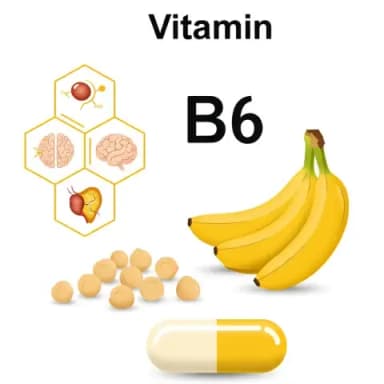
Vitamin B6
Pyridoxine (with active form pyridoxal 5′-phosphate)
Also known as: Pyridoxal, Pyridoxamine, Pyridoxine hydrochloride
Vitamin B6 is a water-soluble vitamin involved in over 100 enzymatic reactions, supporting protein metabolism, neurotransmitter synthesis, and immune function. Adequate intake prevents deficiency syndromes and supports overall health.
Introduction
Vitamin B6 refers to a group of chemically similar compounds—pyridoxine, pyridoxal, and pyridoxamine—all converted to the active coenzyme form pyridoxal 5′-phosphate (PLP). Discovered in the 1930s, vitamin B6 plays essential roles in amino acid metabolism, gluconeogenesis, neurotransmitter synthesis (serotonin, dopamine, GABA), hemoglobin formation, and modulation of steroid hormone action. Dietary sources include both animal (poultry, fish, organ meats) and plant (whole grains, legumes, nuts, bananas) foods. In the body, PLP acts as a cofactor for enzymes involved in transamination, deamination, and racemization critical for protein and amino acid metabolism. Vitamin B6 contributes to homocysteine metabolism via cystathionine β-synthase, reducing cardiovascular risk. Inadequate intake or impaired absorption leads to deficiency, manifesting as microcytic anemia, dermatitis, glossitis, depression, irritability, and neuropathy. Populations at higher risk include the elderly, alcoholics, individuals with malabsorptive disorders, and those on medications like isoniazid or oral contraceptives. The Recommended Dietary Allowance for adults ranges from 1.3 to 1.7 mg/day. Therapeutic doses up to 100 mg/day may be used for conditions like carpal tunnel syndrome or PMS, but chronic intake above the Tolerable Upper Intake Level of 100 mg/day can cause sensory neuropathy. PLP is absorbed in the jejunum and binds to albumin for transport; excess is catabolized to 4-pyridoxic acid and excreted in urine, underscoring its water-soluble nature.
Main Benefits
Supports amino acid and protein metabolism by serving as a coenzyme for transaminases and deaminases.
Aids neurotransmitter synthesis, including serotonin and dopamine, promoting cognitive function and mood regulation.
Contributes to homocysteine metabolism, reducing cardiovascular risk by facilitating conversion to cystathionine.
Supports hemoglobin synthesis and prevents microcytic anemia through its role in heme production.
Mechanism of Action
Vitamin B6 functions as the coenzyme pyridoxal 5′-phosphate (PLP). PLP-dependent enzymes include aminotransferases responsible for amino acid interconversion and deaminases involved in amino acid catabolism. In neurotransmitter biosynthesis, PLP is a cofactor for aromatic L-amino acid decarboxylase and glutamate decarboxylase, producing serotonin, dopamine, and GABA. For homocysteine remethylation, PLP is essential for cystathionine β-synthase, catalyzing homocysteine conversion to cystathionine, thereby lowering plasma homocysteine. PLP also participates in glycogen phosphorylase activation for gluconeogenesis and glycogenolysis. In heme synthesis, PLP-dependent δ-aminolevulinic acid synthase catalyzes the condensation of glycine and succinyl-CoA, initiating porphyrin formation. Furthermore, vitamin B6 facilitates sphingolipid synthesis and modulates steroid hormone action by influencing gene expression. Absorbed in the jejunum via passive diffusion, vitamin B6 binds to albumin and crosses cell membranes to be phosphorylated by pyridoxal kinase. Excess is catabolized to 4-pyridoxic acid and excreted in urine.
Natural Sources
Vitamin B6 is abundant in various foods. Animal-based sources include poultry (chicken, turkey), fish (salmon, tuna), and organ meats (liver). Plant sources encompass whole grains, legumes (chickpeas, lentils), nuts (walnuts, peanuts), and fruits like bananas and avocados. Fortified cereals also provide significant amounts.
Examples:
Poultry (chicken, turkey)
Fish (salmon, tuna)
Organ meats (liver)
Whole grains
Legumes (chickpeas, lentils)
Nuts (walnuts, peanuts)
Bananas
Avocados
Fortified breakfast cereals
Widely available in both animal and plant foods; a varied diet typically meets requirements.
Deficiency Symptoms
Vitamin B6 deficiency can manifest as microcytic anemia due to impaired hemoglobin synthesis and neurologic symptoms including peripheral neuropathy, seizures, irritability, and depression. Dermatologic signs include cheilosis, glossitis, and seborrheic dermatitis. Elevated homocysteine may increase cardiovascular risk.
Common Symptoms:
Microcytic anemia (fatigue, pallor)
Peripheral neuropathy (numbness, tingling)
Seizures (in infants)
Depression and irritability
Cheilosis and glossitis
Rare in general population but risk increases with malabsorption, alcoholism, and certain medications.
Deficiency can lead to significant neurologic and hematologic dysfunction if untreated.
Recommended Daily Intake
Recommended Dietary Allowances for vitamin B6 are established by the Institute of Medicine (US) and vary by age, sex, and life stage to prevent deficiency and support metabolic functions.
Reference Values:
| Infants 0-6 months | 0.1 mg/day |
| Infants 7-12 months | 0.3 mg/day |
| Children 1-3 years | 0.5 mg/day |
| Children 4-8 years | 0.6 mg/day |
| Children 9-13 years | 1.0 mg/day |
| Adolescents 14-18 years (males) | 1.3 mg/day |
| Adolescents 14-18 years (females) | 1.2 mg/day |
| Adult men (19-50 years) | 1.3 mg/day |
| Adult women (19-50 years) | 1.3 mg/day |
| Adult men (51+ years) | 1.7 mg/day |
| Adult women (51+ years) | 1.5 mg/day |
| Pregnant women | 1.9 mg/day |
| Lactating women | 2.0 mg/day |
Sources for RDI/AI:
- https://ods.od.nih.gov/factsheets/VitaminB6-HealthProfessional/
- https://iom.nal.usda.gov/sites/default/files/migrated/Dietary-Reference-Intakes_Full_document.pdf
These values are general recommendations. Individual requirements may vary; consult a healthcare provider for personalized guidance.
Effectiveness for Specific Focuses
Essential cofactor in energy production through amino acid and glycogen metabolism.
Supports neurotransmitter synthesis, impacting mood and cognitive health.
Facilitates homocysteine metabolism, reducing cardiovascular risk.
Safety Information
Potential Side Effects
Nausea
Headache
Sensory neuropathy (with chronic high-dose intake)
Contraindications
Allergy to vitamin B6 supplements
Use with caution in severe renal impairment
Overdose Information
Chronic intake above 100 mg/day may cause sensory neuropathy; UL defined.
High-dose vitamin B6 can lead to painful sensory neuropathy, with dorsal root ganglia damage manifesting as loss of sensation and ataxia.
Documented Overdose Symptoms:
Sensory neuropathy (pain, numbness)
Ataxia
Loss of proprioception
Toxicity Thresholds: UL for adults: 100 mg/day (Source: https://ods.od.nih.gov/factsheets/VitaminB6-HealthProfessional/)
Excess vitamin B6 is cleared renally, but chronically high doses above UL increase neuropathy risk.
Interactions
Drug Interactions:
May reduce efficacy of levodopa unless coadministered with carbidopa
Isoniazid and penicillamine can increase B6 requirements
Moderate risk; certain medications interfere with vitamin B6 metabolism.
Other Supplement Interactions:
High folate intake may mask vitamin B6 deficiency signs
Low risk; interactions generally related to overlapping metabolic pathways.
Do not exceed recommended upper intake level. Individuals with neuropathy or on interacting medications should consult a healthcare provider before use.
Forms and Bioavailability
Vitamin B6 is available as pyridoxine hydrochloride tablets, pyridoxal 5′-phosphate (active form) supplements, and fortified foods. Bioavailability depends on form and gastrointestinal function, with PLP being immediately active.
Pyridoxine Hydrochloride Tablet
Requires conversion to PLP in the liver; bioavailability is high in healthy individuals.
Efficiently absorbed and converted, but requires hepatic activation.
Take with food to minimize gastrointestinal discomfort.
Pyridoxal 5′-Phosphate (PLP)
Active coenzyme form; does not require conversion, leading to rapid plasma uptake.
Bypasses enzymatic conversion, improving bioavailability especially in individuals with impaired metabolism.
Often more costly; suitable for those with liver or genetic conversion deficiencies.
Fortified Food
Naturally and industrially fortified sources like cereals and energy bars contain accessible vitamin B6.
Variable content; absorption similar to supplemental pyridoxine.
Check nutrition labels for fortification levels.
Warnings & Suitability
Did You Know...?
Vitamin B6 was first recognized as an essential nutrient in 1934 and structurally characterized in 1938.
Over 100 enzyme reactions depend on PLP, making B6 critical for diverse metabolic pathways.
Excess vitamin B6 is excreted in urine as 4-pyridoxic acid, giving urine a distinct fluorescence under UV light.
General Scientific Sources
Tags
Content Verification
Last Medical Review: {{TO_BE_FILLED_BY_SYSTEM}}
Reviewed by: Editorial Team