
Yerba Mate
Ilex paraguariensis
Also known as: Mate, Paraguayan tea, Brazilian tea
Yerba mate is a traditional South American herbal tea made from Ilex paraguariensis leaves, rich in caffeine and polyphenols. It promotes energy, mental alertness, and antioxidant protection, and supports metabolism and cardiovascular health.
Introduction
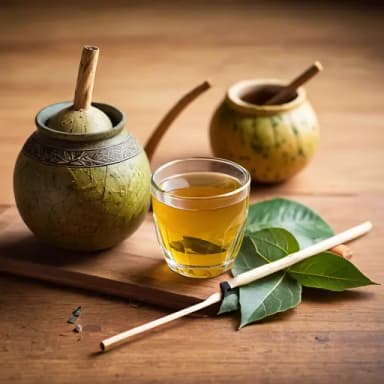
Yerba mate, prepared by steeping dried leaves and stems of Ilex paraguariensis, has been consumed for centuries in Argentina, Brazil, Paraguay, and Uruguay. It contains caffeine (approximately 70–90 mg per 8-oz cup), theobromine, and various polyphenols such as chlorogenic acid and caffeoyl derivatives that provide antioxidant and anti-inflammatory effects. Traditional consumption involves a gourd (called a “mate”) and a metal straw (“bombilla”), but modern preparations include tea bags, loose-leaf infusions, and extracts. Studies suggest yerba mate may enhance energy and cognitive function by stimulating the central nervous system, improve metabolic parameters and lipid profiles, and support exercise performance by reducing muscle fatigue. Additionally, its antioxidant compounds help neutralize free radicals, potentially lowering oxidative stress and inflammation. Typical dosages range from 1–3 grams of dried leaves steeped per cup, consumed 1–4 times daily. While short-term use (up to 12 weeks) appears safe for most adults, high intake—particularly of very hot infusions—has been associated with increased risk of certain cancers and caffeine-related side effects. Populations sensitive to caffeine, pregnant or breastfeeding individuals, and those with cardiovascular conditions should exercise caution and consult a healthcare provider.
Main Benefits
Provides a natural energy boost and enhanced mental alertness via caffeine and theobromine.
Rich in antioxidants (polyphenols like chlorogenic acid) that neutralize free radicals and reduce oxidative stress.
Supports metabolism and may aid weight management by improving lipid profiles and insulin sensitivity.
Promotes cardiovascular health by reducing LDL cholesterol and improving endothelial function.
Mechanism of Action
Yerba mate’s stimulant effects are primarily due to caffeine, which blocks adenosine receptors in the brain, enhancing alertness. Theobromine and small amounts of theophylline further contribute to mild stimulant activity and vasodilation. Polyphenols like chlorogenic acid and caffeoyl derivatives exhibit antioxidant properties by scavenging free radicals and upregulating endogenous antioxidant enzymes. These compounds also modulate key metabolic enzymes, improving lipid metabolism and insulin sensitivity. Saponins and phytosterols found in yerba mate may reduce cholesterol absorption and exert anti-inflammatory effects. Altogether, these bioactive constituents support antioxidant defense, metabolic health, and cognitive function while providing mild diuretic and thermogenic effects.
Natural Sources
Yerba mate is harvested from the leaves and stems of the evergreen tree Ilex paraguariensis, native to subtropical South America. It is traditionally consumed as a hot or cold infusion but not typically eaten as a food source.
Examples:
Dried leaves of Ilex paraguariensis
Stems of Ilex paraguariensis
Sourcing authentic yerba mate outside South America can be challenging; available mainly as packaged tea or extracts
Recommended Daily Intake
There is no established Recommended Dietary Intake for yerba mate. Typical consumption ranges from 1 to 3 grams of dried leaves per infusion, 1–4 times daily, delivering approximately 70–90 mg of caffeine per cup.
Sources for RDI/AI:
- https://www.webmd.com/vitamin/ai/ingredientmono-828/yerba-mate
- https://pubmed.ncbi.nlm.nih.gov/36647770/
These consumption levels are general observations; individual tolerance and safe intake may vary. Consult a healthcare provider.
Effectiveness for Specific Focuses
Caffeine and theobromine provide a significant energy boost and improve alertness.
High polyphenol content supports antioxidant defense and reduces oxidative stress.
Caffeine enhances attention and memory, while polyphenols support brain antioxidant status.
Improves exercise performance and reduces muscle fatigue via enhanced metabolism and antioxidant action.
Safety Information
Potential Side Effects
Jitteriness (due to caffeine)
Insomnia
Increased heart rate
Stomach upset or nausea
Contraindications
Pregnancy and breastfeeding (limit caffeine to <200 mg/day).
Caffeine sensitivity or anxiety disorders.
Osteoporosis risk (high intake increases calcium excretion).
Overdose Information
Contains caffeine; excessive intake can cause toxicity similar to caffeinism.
High consumption can cause caffeine toxicity: nausea, headache, tachycardia, tremors, insomnia, and anxiety.
Documented Overdose Symptoms:
Nausea
Headache
Palpitations
Tremors
Insomnia
Anxiety
Long-term consumption of very hot yerba mate has been linked to increased risk of esophageal and other cancers, possibly due to polycyclic aromatic hydrocarbons (PAHs) produced during leaf drying.
Interactions
Drug Interactions:
Stimulants e.g., ephedrine, amphetamines, Combined use may cause excessive CNS stimulation and cardiovascular strain
Anticoagulants Antiplatelets e.g., warfarin, Caffeine could affect clotting, monitor when combined.
MAO Inhibitors Caffeine may interact to increase blood pressure and risk of hypertensive crisis.
Certain antibiotics like fluoroquinolones, may slow caffeine metabolism, increasing caffeine-related side effects.
Moderate risk due to caffeine’s interactions with various medications, spacing intake and monitoring recommended.
Other Supplement Interactions:
Other caffeinated supplements e.g., guarana, green tea extract, Combined caffeine may exceed safe limits.
High-antioxidant supplements e.g., vitamin C, E, Potential additive effects on antioxidant pathways, generally low risk but monitor for interactions in therapeutic settings.
Mild to moderate risk, monitor overall caffeine and antioxidant intake
Not recommended for children, pregnant or breastfeeding individuals, and those with cardiovascular disorders or severe caffeine sensitivity. Consume in moderation and avoid very hot preparations to reduce potential cancer risk.
Forms and Bioavailability
Yerba mate is available as loose-leaf tea, tea bags, capsules, and concentrated liquid extracts. Extracts and capsules may offer more consistent dosing and bioavailability compared to brewed tea.
Loose-Leaf Tea
Traditional preparation yielding moderate extraction of caffeine and polyphenols.
Variable infusion time and temperature affect compound release.
Commonly consumed via gourd and bombilla.
Tea Bags
Convenient preparation with standardized leaf-to-water ratio for consistent infusion.
Consistent but slightly lower polyphenol content than loose-leaf.
Easy for daily brewing.
Capsules
Provide concentrated freeze-dried yerba mate powder for standardized dosing.
Higher and more consistent polyphenol and caffeine content per dose.
Useful for those avoiding beverage preparation.
Liquid Extract
Highly concentrated extracts offer rapid absorption of bioactive compounds.
Rapid uptake of caffeine and polyphenols compared to tea infusion.
Convenient for mixing into drinks or smoothies.
Warnings & Suitability
Did You Know...?
Yerba mate was first documented by European explorers in the 16th century and was traditionally consumed by indigenous Guarani people in Paraguay and Brazil.
Yerba mate contains more antioxidants (polyphenols) than green tea when brewed under similar conditions, offering enhanced free radical scavenging.
General Scientific Sources
Tags
Content Verification
Last Medical Review: 5/29/2025
Reviewed by: Editorial Team