
Medical Disclaimer: This information is for educational purposes only and is not intended as medical advice. Always consult a qualified healthcare provider before starting any supplement, especially if you have a health condition or take medications.
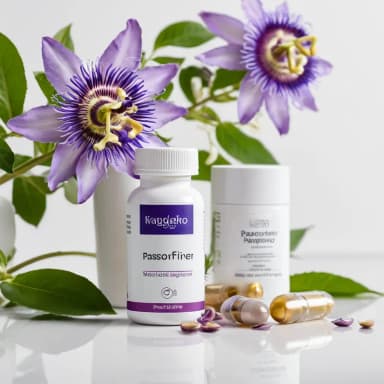
Passionflower
Passiflora incarnata
Also known as: Maypop, Purple Passionflower, Passion Vine, Passiflora, Apricot Vine, Wild Passionflower
Passionflower is a climbing vine traditionally used for anxiety and insomnia. Modern research shows promise for anxiety relief, with some studies demonstrating effects comparable to prescription anxiolytics. Generally safe with a long history of traditional use.
Introduction
Passionflower (Passiflora incarnata) is a fast-growing climbing vine native to the southeastern United States, recognizable by its intricate purple and white flowers that Spanish missionaries historically associated with Christ's passion— hence the name "passionflower."
Native Americans used passionflower for centuries as a sedative and treatment for various conditions including anxiety, insomnia, and pain. It was adopted into European medicine in the 16th century and has remained popular in herbal medicine worldwide.
The above-ground parts (aerial parts) of the plant are used medicinally, containing a complex mixture of bioactive compounds including:
- Flavonoids (chrysin, apigenin, vitexin): Primary active compounds with anxiolytic and sedative effects
- Alkaloids (harmala alkaloids in trace amounts): May contribute to effects
- Maltol and ethylmaltol: Compounds with CNS depressant activity
- Glycosides and essential oils
Passionflower is primarily used for:
- Anxiety: Reducing symptoms of generalized anxiety and nervousness
- Insomnia: Improving sleep quality and reducing time to fall asleep
- Nervous restlessness: Calming nervous excitability
The mechanism of action involves modulation of GABA (gamma-aminobutyric acid) receptors in the brain. Flavonoids like chrysin and apigenin bind to GABA-A receptors, increasing GABAergic activity and producing anxiolytic and sedative effects without the side effects of benzodiazepines.
Clinical evidence for anxiety is promising but limited. A few randomized controlled trials have shown benefits comparable to oxazepam (a benzodiazepine) for generalized anxiety disorder, though more large-scale studies are needed.
For sleep, evidence is more limited. Some studies suggest benefits, but results are less consistent than for anxiety.
Passionflower is generally recognized as safe when used at recommended doses. Side effects are rare and typically mild. However, the presence of trace harmala alkaloids (MAO inhibitors) raises theoretical concerns about drug interactions, though clinical significance at typical doses appears low.
Main Benefits
Reduces symptoms of generalized anxiety disorder; some RCTs show effects comparable to benzodiazepines (oxazepam) with fewer side effects.
May improve sleep quality and reduce time to fall asleep; preliminary evidence for insomnia support.
Modulates GABA receptors through flavonoids (chrysin, apigenin) producing anxiolytic effects without significant sedation or cognitive impairment.
Generally well-tolerated with excellent safety profile; few side effects reported at recommended doses.
Mechanism of Action
Passionflower's anxiolytic and sedative effects are mediated primarily through GABAergic mechanisms and potentially other neurotransmitter systems:
- GABA-A Receptor Modulation: The primary mechanism involves flavonoids acting as positive allosteric modulators of GABA-A receptors:
- Chrysin and apigenin bind to benzodiazepine-binding sites on GABA-A receptors
- Increase GABA receptor affinity for GABA
- Enhance chloride ion influx, producing neuronal hyperpolarization
- Results in anxiolytic and mild sedative effects
- GABA Content: Passionflower contains small amounts of GABA:
- May contribute to direct GABAergic effects
- Bioavailability of plant GABA crossing blood-brain barrier is debated
- Monoamine Oxidase Inhibition: Trace harmala alkaloids (harmine, harmaline):
- Have MAO-inhibiting properties at higher concentrations
- May modulate serotonin and other monoamines
- Clinical significance at typical therapeutic doses unclear
- Anti-inflammatory Effects: Some passionflower constituents have demonstrated anti-inflammatory properties:
- May reduce neuroinflammation
- Could contribute to anxiolytic effects through anti-inflammatory mechanisms
- Neuroprotective Effects: Preliminary research suggests:
- Antioxidant properties protecting neurons
- Potential neuroprotective effects in models of neurological disorders
Advantages over Benzodiazepines: Unlike prescription benzodiazepines, passionflower's GABA modulation appears to:
- Not cause significant sedation or drowsiness at anxiolytic doses
- Not impair cognitive function
- Have lower risk of dependence or withdrawal
- Not cause tolerance with continued use
Pharmacokinetics: Flavonoids are absorbed after oral administration. Peak plasma levels occur within 1-2 hours. Chrysin has relatively poor bioavailability due to rapid metabolism, though metabolites may retain activity.
Natural Sources
Passionflower is native to southeastern United States but now grows worldwide in tropical and subtropical regions. The aerial parts (leaves, stems, flowers) are harvested for medicinal use. Some species produce edible fruit (maypop). Used primarily as herbal medicine, not as food.
Examples:
Passionflower aerial parts (leaves, stems, flowers)
Passionflower extract (standardized)
Passionflower tea
Passionflower tincture
Not consumed as food; medicinal herb only; widely available as supplement; some species produce edible fruit but not medicinal varieties.
Recommended Daily Intake
No established RDA. For anxiety: 400-800 mg extract daily, divided doses. For sleep: 400-800 mg 30-60 minutes before bedtime. Tea: 1-2 g dried herb steeped. Effects may be noticed within hours but may take days for full benefit.
Effectiveness for Specific Focuses
Strongest evidence base; RCTs show anxiety benefits; GABAergic mechanism well-characterized; may be as effective as benzodiazepines for mild-moderate anxiety.
Moderate evidence for sleep; improves sleep quality in some studies; less consistent evidence than for anxiety.
Safety Information
Potential Side Effects
Dizziness
Drowsiness
Confusion (rare)
Irregular muscle action (rare)
Nausea
Contraindications
Pregnancy (uterine stimulant in animal studies)
Surgery (discontinue 2 weeks before)
MAO inhibitor use
Overdose Information
Generally very safe; no documented serious overdose; side effects mild and uncommon at recommended doses.
Very safe with long history of use. Some species contain cyanogenic glycosides but Passiflora incarnata (medicinal species) is safe.
Interactions
Drug Interactions:
MAO inhibitors (theoretical risk from harmala alkaloids)
Sedatives (additive effects)
Benzodiazepines (additive effects)
CNS depressants (additive effects)
Blood thinners (may enhance effects)
Significant concern with MAO inhibitors; moderate caution with sedatives; theoretical interaction with blood thinners.
Other Supplement Interactions:
Other sedating herbs (additive effects)
5-HTP (theoretical serotonin concern)
Valerian (commonly combined)
Kava (additive sedation)
Caution with other sedatives; often combined with valerian for sleep; avoid with 5-HTP.
Avoid during pregnancy due to uterine stimulant effects. Do not combine with MAO inhibitors. May cause drowsiness—avoid driving. Discontinue before surgery. Generally recognized as safe.
Forms and Bioavailability
Passionflower available as dried herb, standardized extracts, and tinctures. Aerial parts used (not root). Standardized extracts (flavonoid content) preferred for consistent dosing.
Standardized Extract
Concentrated extract with standardized flavonoid content; consistent dosing; most studied form.
Flavonoids absorbed; chrysin has limited bioavailability but still effective; clinical evidence supports use.
Use 400-800 mg daily. Look for standardized flavonoid content. Most reliable form.
Dried Herb (Tea)
Traditional preparation; variable flavonoid content; pleasant taste.
Flavonoids extracted in hot water; traditional use supports efficacy; pleasant ritual.
Use 1-2 g dried herb steeped 10-15 min. Pleasant taste. Good for evening ritual.
Tincture
Alcohol extract; rapidly absorbed; flexible dosing.
Good absorption; convenient; easy to adjust dose.
Use 1-2 ml (1:5 ratio). Contains alcohol. Convenient dosing.
Warnings & Suitability
Did You Know...?
The name "passionflower" comes from Spanish missionaries who saw symbols of Christ's passion in the flower: the ten petals represent the ten faithful apostles, the corona represents the crown of thorns, and the five stamens represent the five wounds.
The fruit of Passiflora incarnata is called "maypop" because it pops when stepped on. It's edible and was a food source for Native Americans and early settlers.
There are over 500 species of Passiflora, but only a few (primarily P. incarnata) are used medicinally. Some ornamental species are toxic.
The flower of Passiflora only blooms for a single day—opening in the morning and closing by evening, living up to its name representing the transience of life.
Despite its calming effects on humans, passionflower is actually a very aggressive and fast-growing vine that can become invasive in warm climates, choking out native vegetation.
General Scientific Sources
Tags
Content Verification
Content created with AI assistance and reviewed for accuracy. Sources are cited throughout the text.
Last Medical Review: 2/25/2026
Reviewed by: Prodata.cc