
Medical Disclaimer: This information is for educational purposes only and is not intended as medical advice. Always consult a qualified healthcare provider before starting any supplement, especially if you have a health condition or take medications.
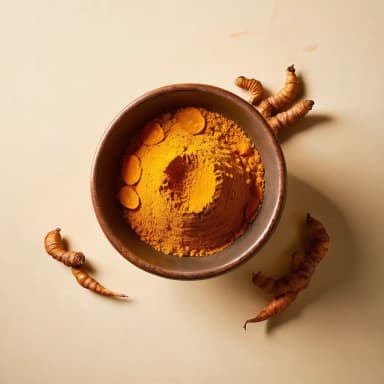
Turmeric (Curcumin)
Curcuma longa
Also known as: Curcumin, Indian Saffron, Jiang Huang, Haldi, Curcuma, BCM-95, Meriva, Longvida
Turmeric is a spice from the ginger family with potent anti-inflammatory properties due to curcuminoids. Clinical trials demonstrate effectiveness for osteoarthritis pain comparable to NSAIDs, with emerging evidence for metabolic and cardiovascular benefits.
Introduction
Turmeric (Curcuma longa) is a flowering plant of the ginger family native to Southeast Asia, where it has been used for over 4,000 years as a culinary spice, dye, and medicinal herb. Its vibrant golden-yellow color and earthy, slightly bitter flavor make it a staple of Indian, Southeast Asian, and Middle Eastern cuisines. However, the medicinal properties of turmeric have been equally valued in traditional Ayurvedic and Chinese medicine systems.
The active compounds in turmeric are curcuminoids, with curcumin being the most abundant and well-studied (typically comprising 2-8% of turmeric by weight). Other curcuminoids include demethoxycurcumin and bisdemethoxycurcumin. Turmeric also contains volatile oils (turmerone, atlantone, zingiberone) that may contribute to some of its biological activities.
In Ayurvedic medicine, turmeric has been used for countless conditions: digestive disorders, liver problems, skin diseases, wounds, respiratory conditions, and joint inflammation. Traditional Chinese Medicine uses turmeric (jiang huang) for pain, menstrual disorders, and chest/abdominal pain.
Modern scientific research has validated the potent anti-inflammatory effects of curcumin, which works through multiple molecular targets. Curcumin inhibits NF-κB, a key regulator of inflammatory gene expression, and reduces the production of pro-inflammatory cytokines (TNF-α, IL-1β, IL-6). It also inhibits COX-2 and 5-LOX enzymes involved in inflammatory mediator production, though through different mechanisms than NSAIDs.
The clinical evidence is strongest for osteoarthritis of the knee. Multiple randomized controlled trials and meta-analyses have shown that curcumin extracts significantly reduce pain and improve physical function, with effects comparable to ibuprofen and diclofenac in some studies. A 2021 systematic review found turmeric/curcumin was non-inferior to NSAIDs for pain and function in knee osteoarthritis.
Beyond joint health, curcumin shows promise for:
- Metabolic syndrome and blood sugar regulation
- Cardiovascular health through endothelial function improvement
- Exercise recovery through reduced muscle damage and inflammation
- Digestive health, particularly for inflammatory bowel conditions
- Cognitive support and mood (preliminary evidence)
A major challenge with curcumin is its poor bioavailability. Native curcumin is poorly absorbed, rapidly metabolized, and quickly eliminated. This has led to development of enhanced formulations:
- Curcumin + Piperine: Piperine (from black pepper) inhibits glucuronidation, increasing absorption by ~2000%
- Phytosome formulations (Meriva): Curcumin bound to phosphatidylcholine for better absorption
- BCM-95/Curcugreen: Curcumin with essential oils from turmeric for enhanced absorption
- Nanoparticle formulations: Curcumin in nanoparticles for improved bioavailability
- Liposomal curcumin: Encapsulated in liposomes for better cellular uptake
The bioavailability-enhanced formulations are essential for therapeutic effects, as studies with unformulated curcumin show minimal systemic exposure even at high doses.
Main Benefits
Significantly reduces pain and improves physical function in knee osteoarthritis; non-inferior to NSAIDs (ibuprofen, diclofenac) in clinical trials.
Potent anti-inflammatory effects through NF-κB inhibition and cytokine reduction; multiple mechanisms distinguish it from NSAIDs.
Reduces joint stiffness and improves mobility in osteoarthritis; significant improvements in WOMAC scores.
Strong antioxidant activity; neutralizes free radicals and enhances body's own antioxidant enzymes (SOD, catalase, glutathione).
May improve endothelial function and cardiovascular health markers; preliminary evidence for metabolic syndrome support.
Reduces exercise-induced muscle damage and inflammation; accelerates recovery after strenuous exercise.
Mechanism of Action
Curcumin exerts its effects through remarkably diverse molecular mechanisms, earning it the designation of a "pleiotropic" compound. Unlike drugs that typically target single proteins, curcumin modulates numerous signaling pathways:
NF-κB Inhibition: The primary anti-inflammatory mechanism involves inhibition of NF-κB (nuclear factor kappa-light-chain-enhancer of activated B cells), the master regulator of inflammatory gene expression. By blocking NF-κB activation, curcumin reduces transcription of pro-inflammatory genes including TNF-α, IL-1β, IL-6, COX-2, and iNOS.
Cytokine Modulation: Curcumin directly reduces circulating levels of pro-inflammatory cytokines while potentially increasing anti-inflammatory cytokines like IL-10. This rebalancing of the inflammatory response is key to its effects in chronic inflammatory conditions.
COX-2 and LOX Inhibition: Curcumin inhibits cyclooxygenase-2 (COX-2) and lipoxygenase (5-LOX) enzymes, reducing production of prostaglandins and leukotrienes (inflammatory mediators). Importantly, curcumin does not significantly inhibit COX-1, which may explain its better gastrointestinal safety profile compared to traditional NSAIDs.
Antioxidant Activity: Curcumin is a potent antioxidant that:
- Directly neutralizes free radicals through its phenolic structure
- Chelates metal ions (iron, copper) that catalyze oxidative reactions
- Upregulates endogenous antioxidant enzymes (superoxide dismutase, catalase, glutathione peroxidase)
- Inhibits enzymes that produce reactive oxygen species
Modulation of Signaling Kinases: Curcumin affects numerous protein kinases including MAPKs, PI3K/Akt, and JAK-STAT pathways, which regulate cell survival, proliferation, and inflammatory responses.
Epigenetic Effects: Emerging research shows curcumin can influence gene expression through epigenetic mechanisms—modifying histone acetylation and DNA methylation patterns. This may contribute to long-term effects on inflammatory gene expression.
Gut Microbiome Modulation: Curcumin influences gut microbiota composition, promoting beneficial bacteria while inhibiting pathogenic species. Since much of the immune system resides in the gut, this may contribute to systemic anti-inflammatory effects.
Chondroprotection: In joint tissues, curcumin may protect cartilage by inhibiting cartilage-degrading enzymes (MMPs) and reducing inflammatory mediators that accelerate cartilage breakdown in osteoarthritis.
Enhanced Bioavailability Strategies: Because native curcumin has poor bioavailability, various approaches enhance its absorption:
- Piperine inhibits glucuronidation in the liver and intestine
- Phospholipid complexes improve membrane permeability
- Essential oils may enhance lymphatic transport
- Nanoparticle formulations improve dissolution and cellular uptake
The multiplicity of mechanisms explains both curcumin's broad therapeutic potential and the challenge of predicting its effects—unlike single-target drugs, curcumin's pleiotropic nature produces complex, system-wide effects.
Natural Sources
Turmeric is the dried rhizome (root) of Curcuma longa, cultivated extensively in India, which produces about 80% of the world's supply. Also grown in other tropical regions. Used extensively as a culinary spice, especially in Indian curry dishes. Fresh turmeric root resembles ginger but with bright orange interior.
Examples:
Fresh turmeric root (rhizome)
Dried turmeric powder (spice)
Turmeric extracts (standardized to curcuminoids)
Curry spice blends
Golden milk (traditional beverage)
Widely available as culinary spice; therapeutic doses require supplementation due to low curcumin content in turmeric powder (2-8%) and poor bioavailability.
Recommended Daily Intake
No established RDA. Therapeutic doses for osteoarthritis typically 500-1000 mg of curcuminoids daily in bioavailability-enhanced formulations. Standard turmeric powder contains only 2-8% curcumin, so 1-3 g of powder provides only 20-240 mg curcumin. Effects typically appear within 4-12 weeks for joint pain.
Effectiveness for Specific Focuses
Strongest clinical evidence; multiple RCTs and meta-analyses showing significant pain reduction and functional improvement in knee osteoarthritis; comparable to NSAIDs.
Potent anti-inflammatory through multiple validated mechanisms (NF-κB inhibition, cytokine reduction); well-established molecular targets.
Strong antioxidant properties through direct radical scavenging and enzyme induction; ORAC value among highest of food compounds.
Preliminary but promising evidence for endothelial function and cardiovascular risk markers; more research needed for definitive conclusions.
Emerging evidence for blood sugar regulation and metabolic syndrome markers; preliminary clinical support.
Safety Information
Potential Side Effects
Gastrointestinal upset (nausea, diarrhea, constipation)
Stomach discomfort or reflux
Yellow discoloration of stool
Headache
Skin rash (rare)
Increased bleeding risk at high doses
Iron deficiency (curcumin binds iron)
Contraindications
Pregnancy (high doses may stimulate uterus)
Gallbladder disease or bile duct obstruction
Bleeding disorders
Upcoming surgery (discontinue 2 weeks before)
Iron deficiency anemia (may worsen)
Overdose Information
Generally well-tolerated; side effects typically mild GI symptoms. Very high doses may cause more pronounced GI distress or ulceration. Generally recognized as safe.
Excellent safety profile at therapeutic doses. Well-tolerated in clinical trials lasting up to 9 months. Native turmeric used in cooking for millennia without toxicity concerns.
Interactions
Drug Interactions:
Blood thinners (warfarin, clopidogrel, aspirin) - increased bleeding risk
NSAIDs (ibuprofen, naproxen) - additive effects, increased GI risk
Diabetes medications (may lower blood sugar)
Chemotherapy drugs (may interfere with efficacy)
Drugs metabolized by CYP3A4 and CYP2C9 (curcumin may inhibit these enzymes)
Iron supplements (reduced absorption)
Stomach acid reducers (may counteract their effects)
Significant concern with anticoagulant/antiplatelet medications due to bleeding risk. Moderate caution with diabetes medications and chemotherapy. Important to discuss with physician.
Other Supplement Interactions:
Omega-3 fatty acids (additive anti-inflammatory effects, additive bleeding risk)
Ginger (additive anti-inflammatory, additive bleeding risk)
Garlic (additive antiplatelet effects)
Ginkgo (additive bleeding risk)
Iron supplements (reduced iron absorption)
Caution with other blood-thinning supplements; otherwise generally compatible. Separate iron supplementation by several hours.
DISCONTINUE 2 WEEKS BEFORE SURGERY due to bleeding risk. Use caution with blood-thinning medications—consult physician. May cause iron deficiency with long-term use; monitor ferritin levels. High doses may cause GI upset; reduce dose or take with food if this occurs.
Forms and Bioavailability
Curcumin formulations vary dramatically in bioavailability. Native curcumin is poorly absorbed (0-5% bioavailability). Bioavailability-enhanced formulations are essential for therapeutic effects. Piperine, phytosomes, nanoparticles, and essential oil combinations significantly improve absorption.
Curcumin with Piperine (Bioperine)
Curcumin combined with piperine (black pepper extract); piperine inhibits glucuronidation, increasing bioavailability ~2000%.
Dramatically improved absorption over native curcumin; well-studied combination; most economical enhanced formulation.
Look for 20:1 curcumin to piperine ratio (e.g., 500mg curcumin + 5mg piperine). Take with meals for best absorption. Some people experience GI sensitivity to piperine.
BCM-95 (Curcugreen)
Curcumin with turmeric essential oils (including turmerones); 7-fold higher bioavailability than plain curcumin; sustained release.
Clinically studied with good efficacy data for osteoarthritis; enhanced absorption without piperine; may provide synergistic effects from essential oils.
Use 500mg once or twice daily. Good option for those sensitive to piperine. Brand names include Curcugreen and BCM-95.
Meriva (Phytosome)
Curcumin bound to phosphatidylcholine (lecithin); ~29-fold higher bioavailability than native curcumin; improved cellular uptake.
Well-studied formulation with multiple clinical trials; phospholipid complex enhances both absorption and cellular uptake; good joint health evidence.
Use 1000mg 1-2 times daily. More expensive but very effective. Particularly good for joint and inflammatory conditions.
Longvida (Solid Lipid Curcumin Particles)
Curcumin in solid lipid nanoparticles; optimized for brain uptake; free curcumin (not just metabolites) reaches systemic circulation.
Unique formulation designed to deliver free curcumin (not just metabolites) to tissues; may be preferable for cognitive applications.
Use 400mg daily. More expensive but optimized for brain delivery. Good choice if cognitive benefits are the primary goal.
Standard Turmeric Powder
Dried and ground turmeric root; contains 2-8% curcumin plus volatile oils and fiber; very poor bioavailability of curcumin.
Very low curcumin content (2-8%); native curcumin poorly absorbed without enhancement; insufficient for therapeutic anti-inflammatory effects at culinary doses.
Use 1-3g daily as spice. Best for culinary use and general wellness. For therapeutic effects, combine with black pepper and fat, but supplements still preferred for treating inflammation.
Warnings & Suitability
Did You Know...?
India produces about 80% of the world's turmeric and consumes about the same percentage. The state of Andhra Pradesh is the largest producer.
Turmeric has been used for over 4,000 years. Ancient texts from Ayurveda describe turmeric as having over 100 different therapeutic applications.
The bright yellow color of turmeric comes from curcuminoids. In traditional Indian weddings, a turmeric paste (haldi) is applied to the bride and groom for its purifying and beautifying properties.
Curcumin's poor bioavailability is so notorious that scientists have called it a "pan-assay interference compound" - meaning it can give false positive results in laboratory tests due to its reactivity, not necessarily true biological activity.
Despite poor absorption, populations that consume large amounts of turmeric in their diet (like India) have lower rates of certain inflammatory conditions, suggesting that even small absorbed amounts or local gut effects may provide benefits.
General Scientific Sources
Tags
Content Verification
Content created with AI assistance and reviewed for accuracy. Sources are cited throughout the text.
Last Medical Review: 2/25/2026
Reviewed by: Prodata.cc