

Vitamins
Understanding Vitamins: Essential Organic Compounds for Life
Vitamins are organic compounds that are vital in small quantities for the normal growth, metabolism, and functioning of the body. They are considered essential nutrients because, with a few exceptions (like Vitamin D, which can be synthesized with sunlight exposure, and Vitamin K and Biotin, which can be produced by gut bacteria), the human body either cannot produce them at all or cannot produce them in sufficient amounts. Therefore, they must primarily be obtained through a balanced and varied diet, or in some cases, through supplementation.
Vitamins play diverse and critical roles in a vast array of biochemical processes, acting as coenzymes, antioxidants, or regulators of gene expression. A deficiency in any particular vitamin can lead to specific health problems, ranging from mild to severe.
Classification of Vitamins:
Vitamins are traditionally classified into two main groups based on their solubility:
Fat-Soluble Vitamins:
- These vitamins (A, D, E, and K) are absorbed along with fats in the diet and are stored in the body's fatty tissues and liver.
- Because they can be stored, excessive intake over prolonged periods can lead to toxicity (hypervitaminosis).
- Vitamin A (Retinoids and Carotenoids): Crucial for vision, immune function, cell growth, and reproduction.
- Vitamin D (Calciferol): Essential for calcium absorption, bone health, immune function, and cell growth modulation.
- Vitamin E (Tocopherols and Tocotrienols): A major antioxidant that protects cell membranes from oxidative damage.
- Vitamin K (Phylloquinone and Menaquinones): Vital for blood clotting and bone metabolism.
Water-Soluble Vitamins:
- This group includes Vitamin C and the B-complex vitamins.
- They are not generally stored in the body for long periods (with the exception of Vitamin B12, which can be stored in the liver). Any excess is usually excreted in urine, meaning they need to be consumed more regularly.
- Vitamin C (Ascorbic Acid): A powerful antioxidant important for immune function, collagen synthesis, and wound healing.
- B-Complex Vitamins: A group of eight distinct vitamins that play crucial roles primarily in energy metabolism, nerve function, and cell health.
- B1 (Thiamine): Energy metabolism, nerve function.
- B2 (Riboflavin): Energy production, cellular function.
- B3 (Niacin): Energy metabolism, DNA repair, skin health.
- B5 (Pantothenic Acid): Synthesis of coenzyme A, energy metabolism.
- B6 (Pyridoxine): Amino acid metabolism, neurotransmitter synthesis, red blood cell formation.
- B7 (Biotin): Metabolism of fats, carbohydrates, and proteins; hair and nail health.
- B9 (Folate/Folic Acid): DNA synthesis, cell division, crucial during pregnancy.
- B12 (Cobalamin): Nerve function, DNA synthesis, red blood cell formation; primarily found in animal products.
Importance of Adequate Vitamin Intake:
Each vitamin performs unique and vital functions. A balanced diet rich in fruits, vegetables, whole grains, lean proteins, and healthy fats is the best way to obtain these essential nutrients. However, certain factors can increase the risk of vitamin deficiencies:
- Poor dietary choices or restrictive diets.
- Malabsorption syndromes (e.g., celiac disease, Crohn's disease).
- Increased physiological needs (e.g., pregnancy, lactation, periods of rapid growth).
- Aging, which can affect nutrient absorption and utilization.
- Certain medications that interfere with vitamin absorption or metabolism.
- Lifestyle factors like excessive alcohol consumption or smoking.
In cases of diagnosed deficiency or increased risk, supplementation may be recommended by a healthcare professional to ensure optimal health and prevent deficiency-related diseases.
This section provides detailed information on individual vitamins, their specific benefits, recommended intakes, and dietary sources. Browse through the supplements listed below to learn more.
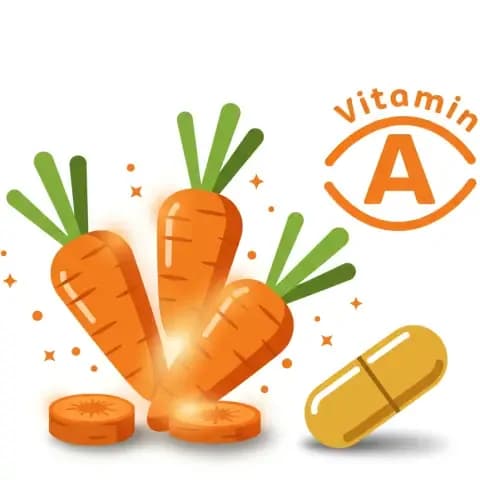
Vitamin A
Vitamin A is a fat-soluble vitamin essential for vision, immune function, cell growth and differentiation, and reproductive health. It exists as preformed vitamin A (retinol) in animal foods and provitamin A carotenoids (like beta-carotene) in plant foods. Vitamin A deficiency is a leading cause of preventable childhood blindness worldwide.
Key focuses:
 Eye Health
 Immunity Support
 Skin, Hair & Nails
Vitamin B1
Vitamin B1 (thiamine) is an essential water-soluble B vitamin crucial for energy metabolism and nerve function. Deficiency causes beriberi and Wernicke-Korsakoff syndrome.
Key focuses:
 Energy & Vitality
 Cognitive Function
 Cardiovascular Health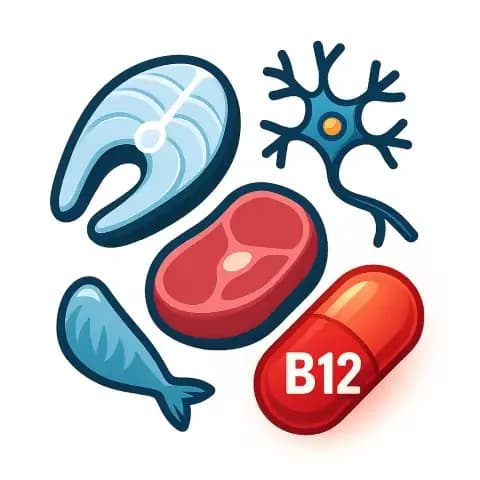
Vitamin B12
Vitamin B12 is a water-soluble vitamin essential for red blood cell formation, neurological function, and DNA synthesis. Deficiency can lead to megaloblastic anemia and neuropathy.
Key focuses:
Energy & VitalityCognitive FunctionCardiovascular Health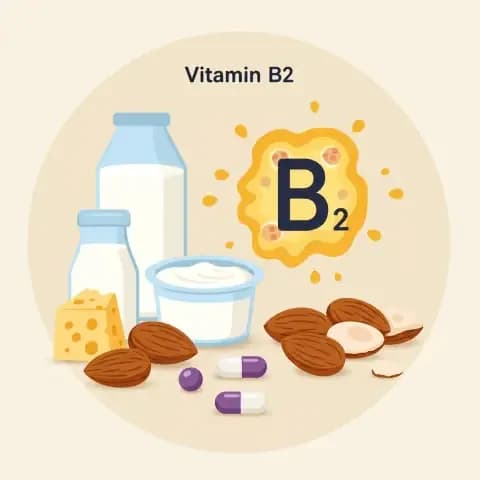
Vitamin B2
Vitamin B2 (riboflavin) is a water-soluble vitamin essential for energy production, cellular function, and growth. It serves as a precursor for two major coenzymes (FMN and FAD) that participate in numerous metabolic reactions. Riboflavin has gained attention for its potential role in migraine prevention.
Key focuses:
Energy & VitalityEye Health Stress & Sleep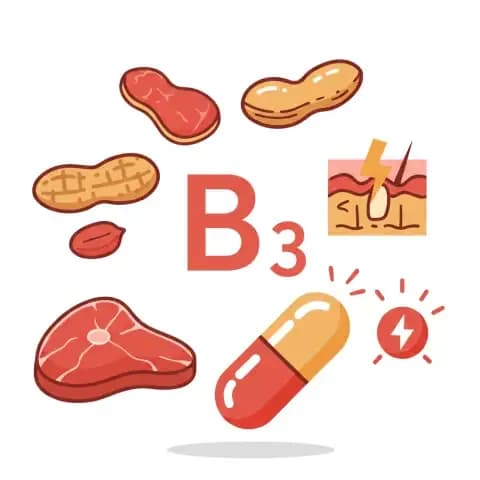
Vitamin B3
Vitamin B3 (niacin) is a water-soluble B vitamin essential for energy metabolism, DNA repair, and cellular signaling. It exists in several forms: nicotinic acid (which causes flushing), nicotinamide (non-flushing), and nicotinamide riboside. Niacin has been used clinically to improve cholesterol levels, though its role in cardiovascular outcomes remains debated.
Key focuses:
 Metabolic HealthCardiovascular HealthEnergy & Vitality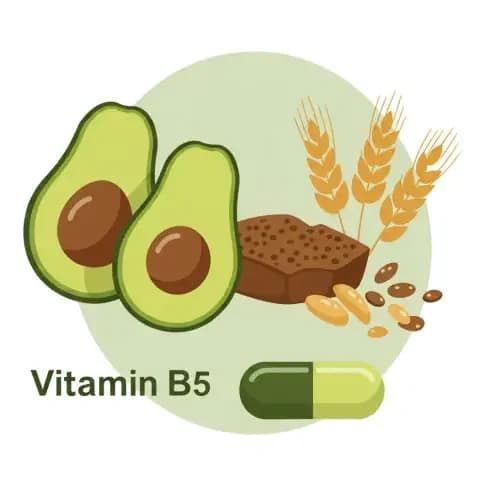
Vitamin B5
Vitamin B5 (pantothenic acid) is an essential water-soluble vitamin required for synthesizing coenzyme A, a critical molecule for energy metabolism and fatty acid synthesis.
Key focuses:
Energy & VitalityMetabolic HealthCardiovascular Health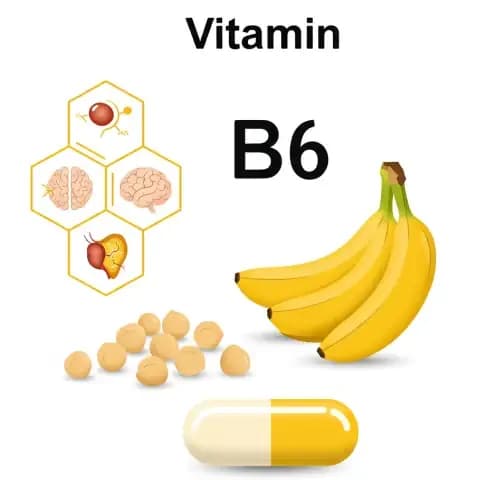
Vitamin B6
Vitamin B6 is a water-soluble vitamin involved in over 100 enzymatic reactions, supporting protein metabolism, neurotransmitter synthesis, and immune function. Adequate intake prevents deficiency syndromes and supports overall health.
Key focuses:
Energy & VitalityCognitive FunctionCardiovascular Health
Vitamin B7
Vitamin B7 (biotin) is an essential water-soluble B vitamin important for healthy hair, skin, and nails. It serves as a cofactor for enzymes involved in metabolism and gene regulation.
Key focuses:
Metabolic HealthSkin, Hair & Nails Women's Health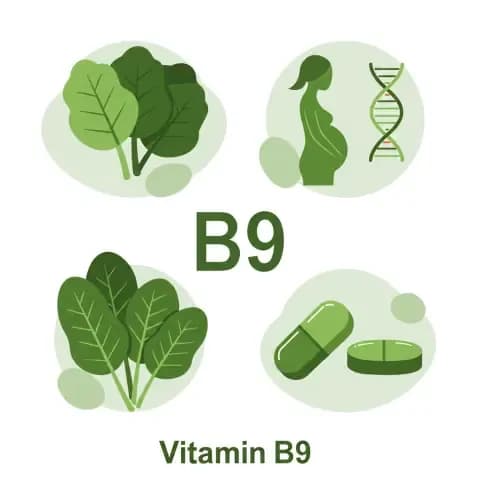
Vitamin B9
Vitamin B9 (folate) is a water-soluble B vitamin essential for DNA synthesis, cell division, and amino acid metabolism. It is critical for preventing neural tube defects during early pregnancy and for red blood cell formation. Folic acid fortification of grains has dramatically reduced birth defects worldwide.
Key focuses:
Women's HealthMetabolic HealthCardiovascular Health
Vitamin C
Vitamin C is an essential water-soluble vitamin known for its potent antioxidant properties and crucial role in immune system support.
Key focuses:
Immunity SupportSkin, Hair & Nails Longevity & Aging
Vitamin D
Vitamin D is a fat-soluble vitamin essential for calcium and phosphate homeostasis, bone strength, and immune support. It is produced in the skin under ultraviolet light and obtained through diet or supplements, then activated by the liver and kidneys.
Key focuses:
 Joint & Bone HealthImmunity Support
 Athletic Support
Vitamin D3 + K2
Vitamin D3 and K2 work synergistically to support bone and cardiovascular health. D3 enhances calcium absorption, while K2 directs calcium to bones and away from arteries through activation of vitamin K-dependent proteins.
Key focuses:
Joint & Bone HealthCardiovascular HealthImmunity Support